As the UK’s food redistributors commit to treble the surplus reaching communities, UKHarvest CEO Lauren Stoner says the real test is whether that food arrives as meals, skills and connection, not just tonnage.
By Lauren Stoner, Interim COO, UKHarvest
In May, the Prime Minister set the country a clear target: triple the surplus food made available for redistribution. Our sector answered. Felix, City Harvest, Community Shop, The Bread and Butter Thing, His Church, Feeding Britain, Neighbourly and the Felix and Xcess networks have come together as the Food Redistribution Partnership UK. We have signed a covenant to share governance, sourcing, logistics and allocation, and to speak to government with one voice.
As a founding member of Xcess, UKHarvest welcomes the Partnership wholeheartedly. For years there has been more good food going to waste than any one charity could rescue. Too much energy goes into competing for the same donors, the same surplus and the same headlines. The Partnership changes the starting question from “who gets the food?” to “how do we get more of it to people, faster?”
We know that question can be answered, because we answer it every week. As redistributors and food providers, we are engaged in the entire process from farm gate collections to front-line cooking and serving food in welcoming community spaces.
Partnership is already working
Once a week, UKHarvest and City Harvest swap surplus food at City Harvest’s depot in Acton. Each pass on what the other can use best. Over the past two years, that exchange has moved 172.5 tonnes of food between us, the equivalent of more than 410,000 meals. This small action is mirrored on a daily basis by us and our partners in Xcess across the country.
Nobody mandated it. It works because two independent charities decided that a stock-control problem for one was an opportunity for the other. That is the covenant in miniature, and it proves the model scales on collaboration and relationships as much as on trucks.
Where the food lands matters most
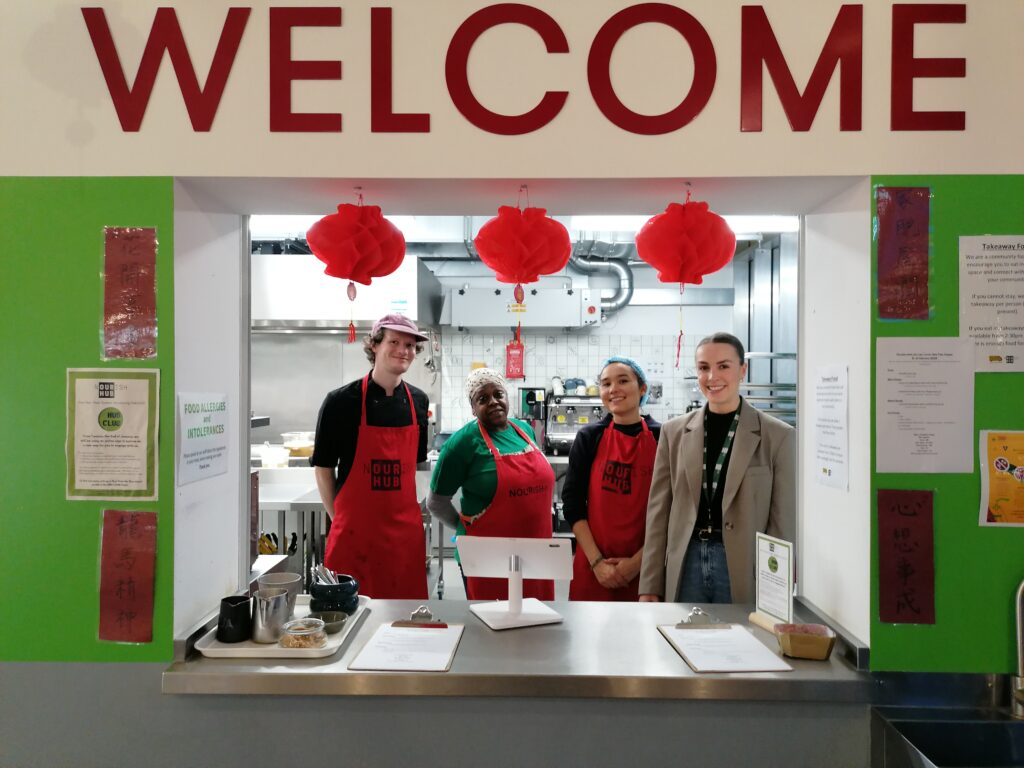
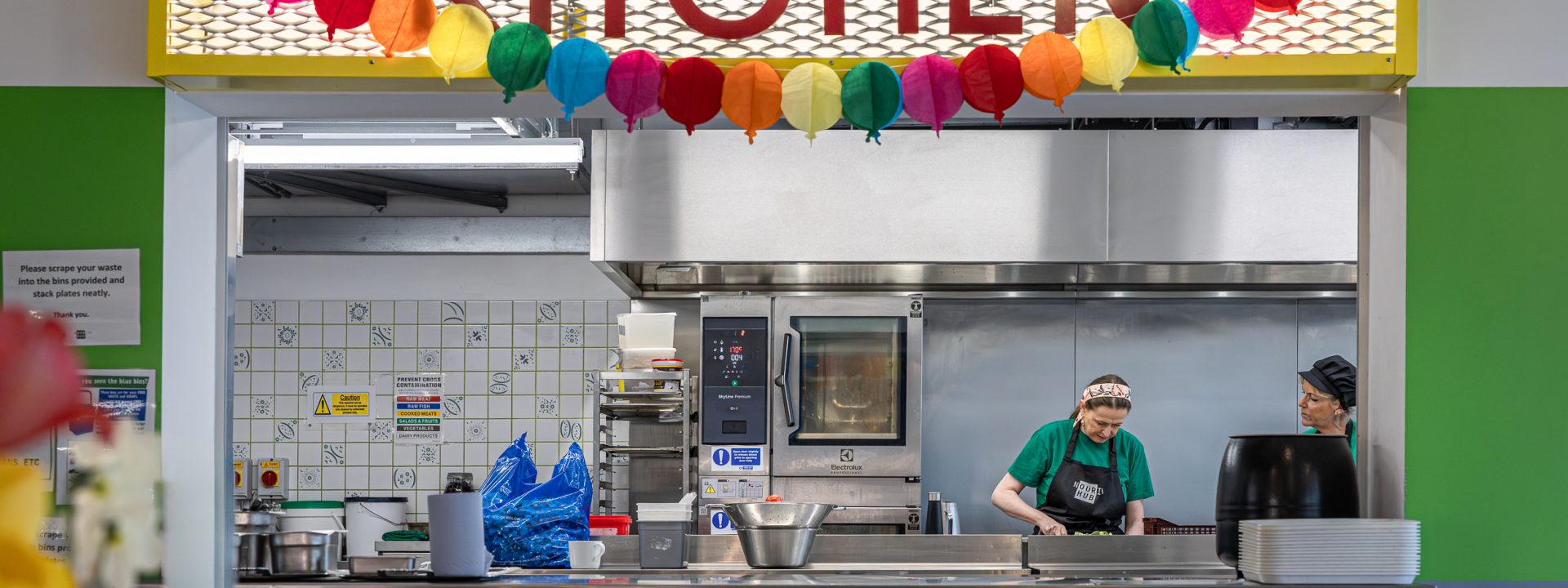
At UKHarvest’s Nourish Hub, on the Edward Woods Estate in Shepherd’s Bush, a row of five long-empty shops is now a community kitchen. Since 2022, City Harvest has delivered 45 tonnes of surplus there, enough for around 107,900 meals, with over 100 tonnes from UKHarvest’s depot on the South Coast. It becomes £3 three-course lunches, meals on wheels delivered by cargo bike, a fortnightly community pantry, and cookery classes for children and adults.
When we asked Nourish Hub users what difference it makes, 70% said they were eating more nutritious food. 79% said it had eased money worries. 83% had met new people there.
Those numbers are the goals. Tripling tonnage is simply the means. The end is people eating well, cooking with confidence and not eating alone.
Four things the redistribution programme must get right
Fund the last mile. Surplus only helps if there are kitchens, fridges, vans, volunteers and trained staff to turn it into meals. Investment must reach community food hubs, not stop at the warehouse door.
Make donations pay. Right now, it is often cheaper for a business to waste food than to give it away. Corporation tax rewards a cash gift but not a food donation, and public subsidies make sending surplus to animal feed or biogas more profitable than feeding people. Government should give food donations the same tax treatment as financial ones and rebalance those subsidies so that people come first.
Keep the independents at the table. National networks bring scale. Local redistributors bring relationships and speed: a pallet of short-dated fruit on a Friday afternoon can be on a lunch table by Monday. One voice must still carry the smaller ones.
Be honest about what redistribution is not. Trussell is right that surplus food is no solution to food insecurity, and it can never replace adequate incomes. What it can do is make sure good food feeds people rather than digesters, while the structural fixes are worked out. And the places it lands can become routes into support, skills and work.
The least we can do
On the border of Notting Hill and Shepherd’s Bush, a row of empty shops now serves lunch to anyone who walks in. Repeat that in wherever surplus and need sit side by side, which in Britain is almost everywhere, and tripling stops sounding ambitious. It starts to sound like the least we can do.
UKHarvest is ready.